

My 2026 Tech Predictions
Even a broken clock is right twice a day....


It seems like each year I never get around to organizing my list of predictions, but this year is different! Yes, I am late to the 2026 prediction game, but I figure if I can get this out by the end of January, it counts!
So here are my somewhat random predictions about what I think will happen in 2026 (and beyond). Let me know your predictions in the comments below (and which of mine you think are BS), and we’ll compare our notes in 12 months!
Tony Fadell becomes Apple CEO!
This one is less prediction than wish—but the timing is right to make it.
Apple is undergoing the most extensive executive overhaul since Steve Jobs died in 2011. The company has lost its AI head, design chief (poached by Meta), general counsel, and COO—all in a few months. Tim Cook turned 65 last month, and the board has intensified succession planning.
The frontrunner is John Ternus, Apple’s hardware engineering chief. He’s described as dependable, calm, and conservative. A safe choice. Another Tim Cook.
But Apple doesn’t need another operations executive. It needs someone who can make products that surprise us again and empower people (aka Bicycles for the mind). Tim Cook once said that Steve Jobs’s philosophy “will be at Apple 100 years from now.” But Jobs’s philosophy wasn’t just about operational excellence—it was about a willingness to experiment, iterate, and pick the best technological solution rather than the one that maximizes next quarter’s revenue. That spirit existed at Hewlett-Packard before its decline. It existed at Apple under Jobs.
I believe that if Apple wants to survive and thrive in the age of AI, they need to appoint Tony Fadell as CEO.
Fadell, the former Apple executive who co-invented the iPod and iPhone, has told associates he’d be open to replacing Cook. Some former Apple executives believe he could help “shake up” the company as a brash product leader.
I first learned of Fadell when he was at General Magic—the most important Silicon Valley startup you’ve never heard of. At General Magic, Fadell sat cubicles away from Andy Rubin. In fact, 98 percent of the world’s smartphone market traces back to these two people. Fadell co-created the iPod and iPhone; Rubin created Android. General Magic failed spectacularly in the 1990s, but its alumni reshaped how the world connects.
Others inside Apple see Fadell as unlikely but a company watching the AI revolution from outside doesn’t need another consensus-builder. It needs someone willing to get products out quickly and rapidly iterate.
BTW, you can watch a documentary about General Magic below for free. I highly recommend.
Apple Will Finally Release Augmented Reality (AR) Glasses This Year
Apple will release lightweight AR glasses in 2026. Not some iteration of the Vision Pro headset—actual glasses you’d wear in public without looking like a scuba diver.
Apple has spent over a decade and billions of dollars acquiring every piece of technology needed to build AR glasses. PrimeSense for depth sensing ($345 million, 2013). LuxVue for microLED displays (~$450 million, 2014). Metaio, whose AR SDK became ARKit. SMI for eye tracking (2017). Akonia Holographics for waveguide lenses that can display images on thin, transparent glass (2018). And Mira, which built AR glasses for Nintendo’s Super Mario World attractions, acquired the same day Apple announced Vision Pro. You don’t spend a decade assembling this portfolio without a product in mind.
Meanwhile, competitors have proven the market exists. Meta’s Ray-Ban glasses have sold over 2 million units—not a massive number, but enough to demonstrate real consumer demand for smart glasses that don’t look ridiculous. Google is partnering with Warby Parker to launch AI glasses this year. Snap has been iterating on Spectacles for years.
This is Apple’s pattern: don’t be there first to market, be the better “fast follower” into a market. The iPod launched three years after the first MP3 players and captured 74% market share. The iPhone arrived eight years after BlackBerry pioneered smartphones and now controls 92% of global smartphone profits. Apple doesn’t need to be first. It needs competitors to validate the market and reveal pain points—then deliver a superior, integrated experience.
Current rumors point to late 2026 for announcement, with the first generation likely focusing on camera, speakers, and Apple Intelligence rather than a full AR display. Establish the product category, then add features—exactly what Apple did with Apple Watch. (Apple just announced that Google’s Gemini will power Siri, so I expect that in the AR glasses).
But here’s why I think Apple glasses will succeed where others stumble: privacy.
Last fall, two Harvard students built I-XRAY, a system that turned Meta Ray-Ban glasses into an automated surveillance tool. Point the glasses at a stranger, and within 90 seconds the system could identify them by name, pull up their home address, phone number, and family members. The technical pipeline was disturbingly simple: livestream to Instagram, run face detection, upload to a reverse face search engine, cross-reference with people-search databases. The demo went viral—over 20 million views. Every stalker’s dream, enabled by $300 glasses.
Meta’s response? A spokesperson dismissed concerns, arguing the technique “would work with any camera, phone or recording device.” Technically true. Completely missing the point. Glasses are different—they’re always on your face, always pointing where you look, socially invisible in a way phones aren’t.
Remember “Glassholes”? Google Glass failed as a consumer product not because of technical limitations but because people hated being around them. Bars banned them. Restaurants kicked out wearers. .
Apple’s walled garden—which is criticized for many good reasons—becomes a feature here. The App Store rejected 400,000 submissions last year specifically for privacy violations. An app trying to connect to facial recognition databases or scrape personal information would never make it through review. Apple processes Face ID entirely on-device—the data never leaves your phone, never backs up to iCloud, Apple has no access. Vision Pro eye tracking works the same way.
Compare that to Meta, whose privacy policy allows voice recordings to be stored for up to a year and images used to train AI models.
When you’re wearing a computer on your face, the question isn’t just “what can this do?” It’s “what can someone else make it do to me?” Apple has spent two decades building architecture that answers that question differently than any other tech company.
AR glasses are coming if they are made by a company that consumers trust.
ChatGPT No More!
OpenAI, the company behind ChatGPT, will no longer exist as an independent entity by the end of this year. It might go bankrupt, or it might be sold off or acquired, but the current company is doomed.
OpenAI lost $5 billion in 2024—spending $2.25 for every $1 it made. In 2025, losses ballooned further. Microsoft’s SEC filings revealed OpenAI lost $11.5 billion in a single quarter last fall. The company expects to burn $115 billion cumulatively through 2029 before—maybe—turning profitable in 2030. Sebastian Mallaby, an economist at the Council on Foreign Relations, predicts OpenAI will run out of cash by mid-2027.
To put this in perspective: it costs more to run OpenAI’s software than the company makes in total revenue—before paying a single employee. Training compute alone obliterates subscription revenue. The more users ChatGPT attracts, the faster the company loses money. Less than 5% of ChatGPT’s 800 million users actually pay.
Compare this to Anthropic, which expects to break even by 2028 while burning a fraction of the cash. OpenAI will burn through roughly 14 times as much money as Anthropic before (theoretically) turning a profit. And the Anthropic product (Claude) is generally considered one of the top two Generative AI systems available today (the other being Google’s Gemini).
The Altman Problem
The deeper issue is leadership. OpenAI’s board tried to fire CEO Sam Altman in November 2023—and if they had succeeded, the company might have survived.
Former board member Helen Toner explained the reasoning on the TED AI Show: Altman had been “withholding information, misrepresenting things that were happening at the company, in some cases outright lying to the board.” He didn’t inform the board about the launch of ChatGPT—they found out on Twitter. He didn’t disclose that he controlled the OpenAI Startup Fund, despite telling Congress he had no financial stake in the company. He gave the board inaccurate information about safety processes on multiple occasions.
Co-founder Ilya Sutskever’s sworn deposition in Elon Musk’s lawsuit revealed even more. The first page of his 52-page memo to the board stated: “Sam exhibits a consistent pattern of lying, undermining his execs, and pitting his execs against one another.” Two executives came to the board describing psychological abuse. Screenshots documented the behavior. Sutskever testified he and then-CTO Mira Murati had been documenting Altman’s conduct for over a year before proposing the ouster.
And here’s the kicker: the board discussed merging with Anthropic within a day of firing Altman—a move that would have put Anthropic’s safety-focused leadership in charge. Anthropic was founded by former OpenAI executives who left specifically because they believed Altman wasn’t taking safety seriously enough. That merger never happened. Investor pressure brought Altman back within five days.
Had the board succeeded, OpenAI might look a lot more like Anthropic today—focused on sustainable growth rather than trillion-dollar moonshots, with leadership that doesn’t cultivate what senior executives allegedly called “a toxic culture of lying.” For once, we might see one of these techbro assholes get the fall they deserve.
The Coming Wildfire
As I wrote in a previous column, the AI bubble won’t pop—it will burn like a wildfire, clearing out poorly run and thought out companies like OpenAI. When OpenAI collapses, what happens to its assets? Microsoft has already funded $11.6 billion of a $13 billion commitment and owns 27% of the company. Analysts predict Microsoft could simply acquire OpenAI within the next few years—or execute what one analyst called a “hackquisition”, hiring the entire team without buying the company outright. They almost did exactly this during the Altman firing, prepared to pay $25-29 billion to poach every employee.
The IP, the talent, the infrastructure—all of it will likely end up absorbed by a cash-rich behemoth. But the company that promised us AGI is “just around the corner”? The one valued at $500 billion while losing $11 billion a quarter? The one led by a CEO whose own co-founder documented a “consistent pattern of lying”? It is toast.
Printers Go OpenSource (Please, Please, Please…)

As mainstream tech companies have locked down their devices and squeezed customers with subscriptions and DRM, an alternative ecosystem has emerged for those willing to seek it out.
Want a laptop you can actually repair and upgrade? Framework sells modular machines with replaceable components and open-source firmware. System76 builds Linux computers with Coreboot—an open-source BIOS replacement that eliminates the proprietary firmware lurking beneath your operating system. Need a smartwatch that doesn’t harvest your data? The PineTime costs $27 and runs community-developed software. Bangle.js lets you write apps in JavaScript and upload them to their open-source phone from a web browser. Last year, the OpenWrt project—after twenty years of developing open-source router firmware—shipped its own hardware: an $89 “unbrickable” router. Even keyboards have gone open, with System76’s Launch series running QMK firmware.
But there’s been one glaring exception in the open source hardware ecosystem: printers.
Printers, and the companies that make them, are uniquely hostile to their owners. HP has faced lawsuit after lawsuit for pushing firmware updates that brick third-party ink cartridges—what the company calls “Dynamic Security.” A class action settled in 2025 didn’t compensate affected customers; HP just agreed to let users opt out of future lockdowns. Canon was sued for $5 million for disabling scanner functionality when users installed unapproved ink. HP’s CEO explained the business model plainly: if a customer “doesn’t print enough or doesn’t use our supplies, it’s a bad investment.”
Yes, some printers are less terrible than others. Corporate laserjets often skip the worst DRM. Tank-based inkjets from Epson avoid cartridge lock-in (what I have now). But until now, there’s been nothing like a Framework for printing—a device designed from the ground up to respect its owner.
Perhaps that will change this year. The Open Printer, from a Paris-based team, is the first serious attempt at a fully open-source inkjet. It runs on a Raspberry Pi Zero W, accepts standard HP cartridges you can refill yourself, prints on sheets or continuous rolls with a built-in cutter, and publishes everything—electronics, mechanical designs, firmware, bill of materials—under Creative Commons. No proprietary drivers. No cartridge DRM. No forced obsolescence.
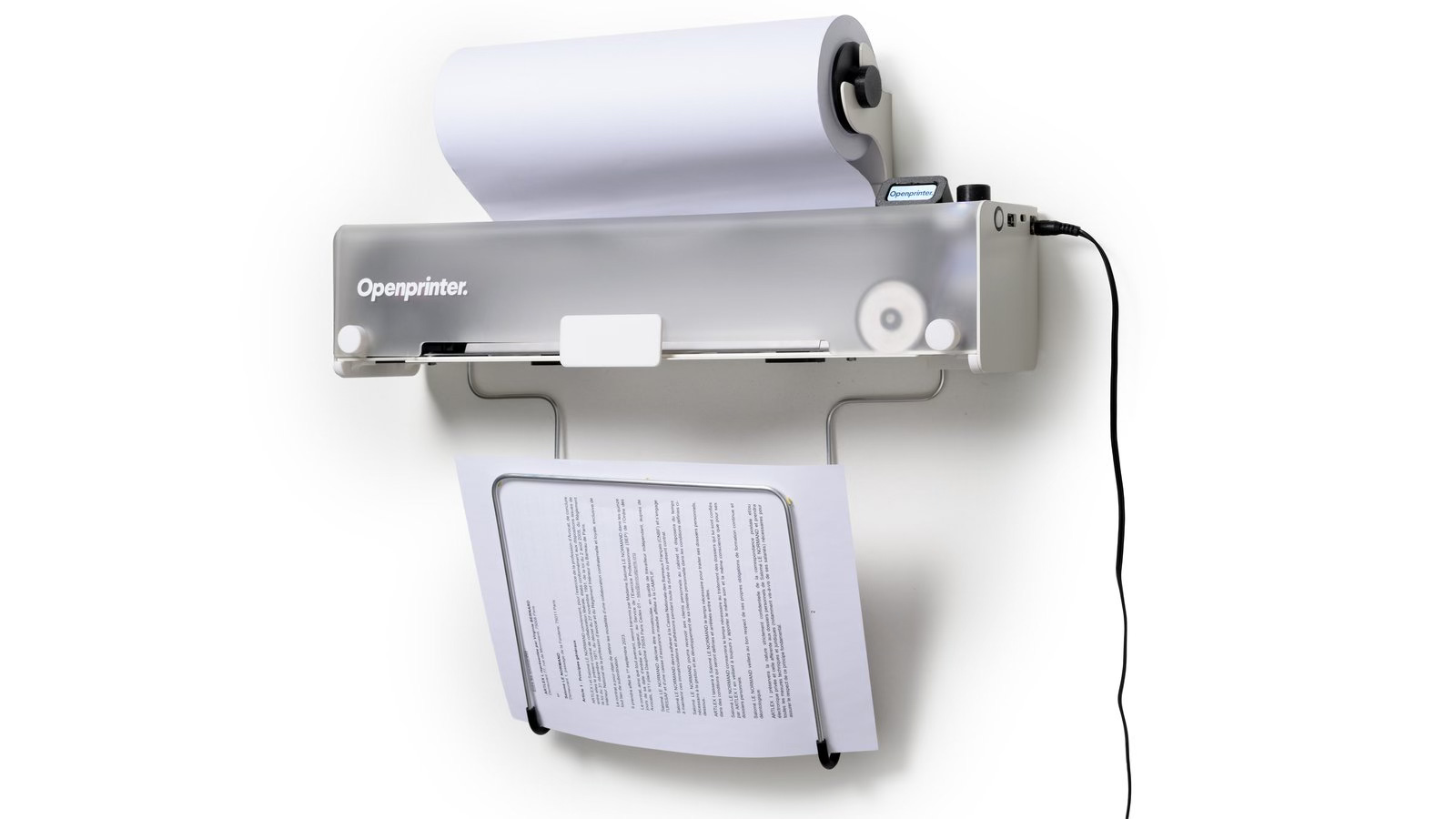
I predict that if Open Printer gains any traction, others will follow. We’ve seen this pattern before: Framework proved modular laptops could work, and the concept spread. Pine64 showed open smartwatches were viable, and an ecosystem bloomed. OpenWrt matured for two decades before building its own hardware.
Printers have been the final holdout of consumer tech enshittification. Let’s hope it ends this year.
Quantum Computing will never be commercially viable (at least until 3582).
Every few months, quantum computing gets another breathless headline. In December 2024, Google announced its Willow chip could solve a problem in five minutes that would take a regular supercomputer “10 septillion years.” For context, that’s longer than the age of the universe by a factor of roughly a billion. It’s also a completely made-up problem that exists solely to make quantum computers look good.
Here’s the pattern with Quantum vs Classical Computers: Quantum researchers create an incredibly specific task, quantum computers ace it, headlines declare the quantum revolution is here, and then classical computer scientists figure out how to do it better on a classical computer.
The fundamental problem is that Quantum computers have so many fundamental noise and error issues that they will never work for general purpose tasks in any field. They need to be kept colder than outer space, are error prone, and can lose their quantum-ness quickly. Meanwhile, classical computers keep getting better, cheaper, and more reliable.
Quantum might have value in certain narrow applications, but for most applications the revolution will continue to be postponed indefinitely.
Let me know how spot on, or how far off, I am in the comments below and what you think will happen in 2026. Remember that predictions are like planning (“Plans are useless, but planning is indispensable”-Dwight D. Eisenhower). In the meantime, here are some other good lists of predictions to checkout.


My commentary may be republished online or in print under Creative Commons license CC BY-NC-ND 4.0. I ask that you edit only for style or to shorten, provide proper attribution and link to my contact information.
I use GenAI to help me edit this newsletter. For details, and the exact prompts I use, see this post.
Book Me for Your Next Conference or Event
After nearly two decades teaching and building innovative programs at the University of Missouri, I’m now focusing more of my time on keynote speaking and workshops—helping organizations make sense of the emerging technologies reshaping work, learning, and leadership.
If your organization, conference, or leadership team is exploring how to navigate AI and emerging technologies responsibly—and productively—I’d love to talk.
For more details, topics, and booking information click here.
📥Recent Talks, News and Updates
I gave several talks recently (Chamber of Commerce, Red River Estate Planning Council, Association of Government Accountants, etc.), and I have compiled a master list of all the studies and articles that I cited or used in these talks, organized by topic. Check it out here: www.profc.io/ai-links
I presented a “Lunch and Learn” at the Daniel Boone Library in collaboration with the League of Women Voters on “AI and Democracy — Guardrails We Can Choose” on December 10th at Noon. You can view the video below.
👍 Products I Recommend
Products a card game for workshop ideation and ice breakers (affiliate link). I use this in my workshops and classes regularly. Made by a former Mizzou student Aaron H.
📆 Upcoming Talks/Classes
I will be presenting “AI Externalities” at Law, Technology, and Society: Charting the Next Frontier symposium on the MU campus on April 15th. Details coming soon.
Fun list. Google Glass was not a great user experience. The value was minimal and the price was too high. I agree on Quantum Computing - Million dollar solution for a five dollar problem.
Scott, I don't have predictions so much as questions.
1. Will Apple begin to move away from privacy as it incorporates Gemini into Siri?
2. Will the backlash against AI grow, stagnate, or fizzle entirely?
3. How big an issue will AI addiction and psychosis become?
4. How big an issue will AI misuse by children become?
5. How will we react when autonomous weapons are rolled out and used on the massive scale that the US and China are planning and implementing?
6. Will the bad behavior of people using smartglasses for harassment, sexual humiliation, etc., trigger widespread attacks on people wearing them as happened with the glassholes?
7. How far will humanoid robots progress this year? How will we react?
8. Can anyone build a printer that works smoothly 99.9% of the time or will they continue to be a constant hassle regardless of who makes them?