


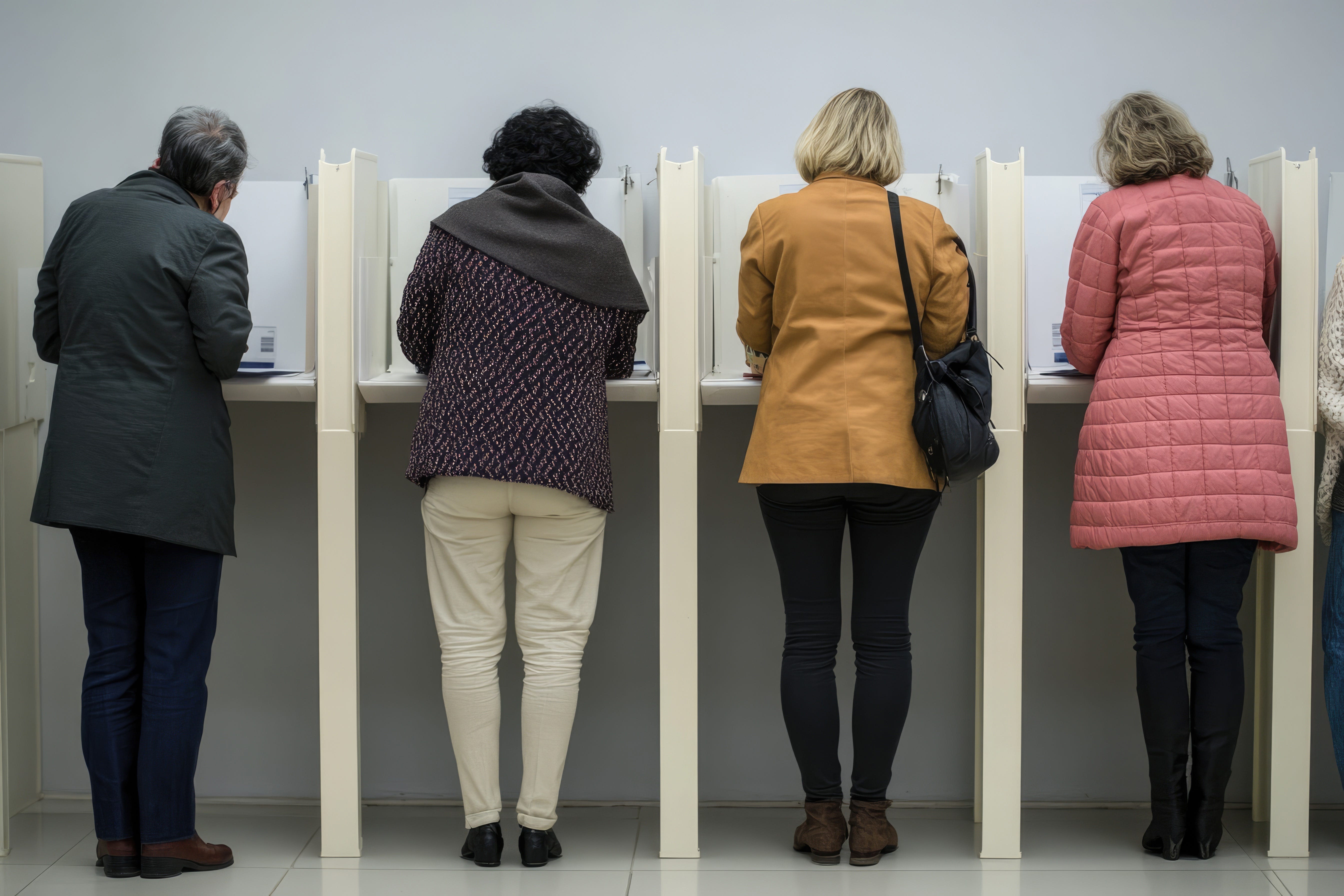
It will probably be well into 2027 before we know how much generative AI influences this November’s election. Or perhaps we will never know, but we should be wary of how these technologies can persuade us.
I previously talked about a study published in Nature last December examined the ability of AI chatbots to influence political attitudes in the United States, Canada and Poland. If you remember, in that study researchers paired people with chatbots that had been instructed to advocate for a particular candidate or ballot measure, measuring the “favorability” of that candidate or measure before and after the interaction with the chatbot. They found that the interaction with the AI chatbot changed voters’ attitudes more than a traditional TV ad, a well-refined form of political persuasion.
Unlike static political ads, robocalls, or a human manning a candidate’s phone bank, a chatbot can talk forever and quickly adjust to your questions or objections with explanations that fit your viewpoint.
Another paper published in Science at about the same time found similar results in a much broader study that surveyed changes in people’s attitudes about 700+ political issues and involved almost 77,000 participants. This study also reassessed attitudes a month later and found that roughly 36 to 42 percent of the chatbots’ persuasive effect remained.
New Research released this June as a “preprint” (meaning it has not yet passed the review process and been officially published) took the comparison further, pitting AI chatbots against human persuaders in the UK, from ordinary people and professional canvassers to competitive debaters, including four world champions. Across four different experiments, they analyzed nearly 19,000 conversations with 6,923 participants.
The expert human persuaders were given opportunities to prepare and the chance to earn £1,000 bonuses. AI still came out ahead. In the first experiment, AI shifted agreement with policy positions by about 13 points on a 100-point scale relative to a control group. Elite debaters managed about eight points.
The chatbot’s advantage appeared to come from how much information it could provide and how fast it could deliver that information. When researchers restricted the length and speed of the chatbot’s response so it resembled human pacing and length, the result was a statistical tie. So it might not be that a chatbot understands people better than people do, but that it talks longer and faster.
The Nature and Science studies found that while the AI chatbots were effective at changing perceptions, their arguments were not always accurate. Chatbots were given instructions to advocate for a candidate or position and often generated a long list of supporting claims, many of which contained factual errors and omissions of fact. David Rand, a co-author on both papers, explained that “even arguments built on accurate claims can still mislead by omission.”
In both studies, the participants were informed that they were interacting with a chatbot, and I wonder how much of a factor that disclosure was in the persuasion. We think of computers as being logical and unbiased machines, and perhaps that makes many people believe the output from a chatbot more than they should. It is easy to forget how weird, unpredictable, inaccurate and biased generative AI can be.
These studies have implications outside of elections, for product sales and even nonprofit fundraising. These findings might encourage nonprofits to use chatbots to seek donations or assist their fundraising staff. Perhaps salespeople will use headphones for live coaching from a store’s chatbot.
These studies cannot tell us how many votes AI might change this November. They do show that it can shift people’s opinions, even when they know they are talking to a machine. Whether a pitch concerns a candidate, a product or a donation, a convincing answer might get us to take action while omitting important information. That could leave us with severe buyer’s remorse after we leave the store or voting booth.
Let me know your thoughts in the comments.
Parts of this post might appear in the Nov Columbia Business Times. My commentary may be republished online or in print under Creative Commons license CC BY-NC-ND 4.0. I ask that you edit only for style or to shorten, provide proper attribution and link to my contact information.
💡RECOMMEND: For exercising your curiosity muscles
Need an icebreaker or a way to get people’s creativity and curiosity going? My former student and colleague Aaron Heienickle created Products: The Card Game, where you combine product and feature cards to invent something new, then pitch your creation. It’s a playful way to get students or colleagues talking, exploring unexpected connections, and asking, “What if?”
I recommend the original for meeting icebreakers and creative warm-ups. For teachers, the Educators Edition adds lesson plans, printable worksheets, and classroom activities to take those ideas further. Aaron is someone I know and respect, and I’m glad to recommend his work. Check it out here.
📥Recent Talks, News and Updates
I have been writing a regular series about AI for the Columbia Business Times. Check out my articles here.
Over the summer I sat down to answer a range questions about AI, and those videos are now posted on the “AI Q&A” play list on my Youtube channel.

I was recently on the Vyom of Happiness podcast talking about AI, tech and how we should think about leading a happy life in the Age of AI on September 20, 2026. You can watch/listen below:
I was recently on The Academic Boardroom podcast talking about various AI and education on September 21, 2026. You can watch/listen below:
I was recently on the PlanAssist podcast talking about various AI and Tech related topics on October 2, 2026. You can watch/listen here:
📆 Upcoming Talks/Classes
I will be presenting several sessions for the AGA Central Kentucky Chapter on October 21, 2026 . For details on the program/registration click here. Description:
Working in the Age of AI
AI is changing how we work, but where does it actually help—and where does it create more work or risk? This session combines current research, practical examples, and live demonstrations to explore what AI can and cannot do, how to use it thoughtfully, and which human skills matter most.
AI and the Public Ledger
A closer look at AI in government accounting and the public services it supports. We’ll explore applications in financial reporting, auditing, and procurement, alongside how constituents and vendors are using AI to prepare submissions and interact with government. The focus is on practical opportunities, emerging risks, and maintaining accuracy, accountability, and public trust.
I will be presenting Trust Is Still Our Business: AI, Ethics, and the Choices We Make for the Better Business Bureau on October 22, 2026 at 12:00 AM. For details on the program/registration click here: google.com
Description: “A marketplace where buyers and sellers trust each other” depends on the everyday choices businesses make. What happens when artificial intelligence becomes part of those choices? In this keynote, J. Scott Christianson, aka Prof C, explores how businesses can put AI to work while honoring the integrity the Torch Awards celebrate. Whether you’re just getting curious about AI or already using it daily, you’ll leave with questions to start a meaningful conversation within your organization—and a clearer sense of how to make trust central to your approach.
I will be presenting AI and Human Judgment: Rethinking Skills, Responsibility, and the Future of Decision-Making for the Ukraine Global Faculty on November 10, 2026. For details on the program/registration contact UGF.
As AI becomes part of everyday life and work, how is it changing the way we learn, think, and make decisions? This lecture explores how we can benefit from AI while preserving human expertise, critical thinking, and independent judgment. It also examines the less visible consequences of AI adoption—including questions of responsibility and governance, social and environmental impacts, and where meaningful human oversight remains essential.
I will be talking to the Central MO Chapter of the Institute of Internal Auditors about the organizational and personal risks related to AI on April 2, 2027.
🎤Help Me Reach New Audiences
Know someone planning a conference, leadership retreat, annual meeting, or staff workshop? I’d appreciate an introduction.
After nearly two decades teaching and building programs at Mizzou, I’m now focused on helping people make sense of AI and emerging technologies, and decide how we should use them responsibly and productively.
My keynotes and workshops combine plain-language explanations, hands-on demos, and room for questions. My goal is for people to leave with a clearer understanding of what’s changing and practical ideas they can put to work.
If my talks or writing have been useful to you, recommending me is a meaningful way to support my work. You can reply to this newsletter to make an introduction or share my speaking page, where you’ll find topics and booking information.
🙏 Thanks for reading and for helping me reach new audiences.
This is why almost every time I send out "Thought food" I state, "Check it out for yourself!"
I'm not persuaded. Perhaps I should consult a chatbot?
I'm being sarcastic, of course. Great article, with scary implications.